September 23, 2026
Why Small Assisted Living Homes Foster Stronger Connections in Dementia Care
By @cesarftaj837
Business Name: BeeHive Homes of Plainview
Address: 1435 Lometa Dr, Plainview, TX 79072
Phone: (806) 452-5883
BeeHive Homes of Plainview
Beehive Homes of Plainview assisted living care is ideal for those who value their independence but require help with some of the activities of daily living. Residents enjoy 24-hour support, private bedrooms with baths, medication monitoring, home-cooked meals, housekeeping and laundry services, social activities and outings, and daily physical and mental exercise opportunities. Beehive Homes memory care services accommodates the growing number of seniors affected by memory loss and dementia. Beehive Homes offers respite (short-term) care for your loved one should the need arise. Whether help is needed after a surgery or illness, for vacation coverage, or just a break from the routine, respite care provides you peace of mind for any length of stay.
1435 Lometa Dr, Plainview, TX 79072
Business Hours
Families typically begin looking for assisted living or memory care after a long stretch of concern. Missed medications. The range left on. A parent who was as soon as precise now using the exact same clothes for days. By the time dementia care goes into the discussion, a lot of families are currently mentally worn and attempting to make the "least bad" decision.
The industry answers that fear with scale. Big senior care communities show you the theater, the beauty salon, the restaurant-style dining-room, the activities calendar. It looks safe and hectic. For some people, it genuinely is the right fit.
Yet in my experience, the residents with dementia who thrive in time tend to reside in smaller, more intimate assisted living homes. Not since the paint is better, but since the little scale makes authentic human connection inevitable. Personnel can not hide. Locals can not disappear. Households feel understood, not processed.
That difference in scale shapes everything from daily regimens to the way a resident is comforted throughout a 3 a.m. Bout of agitation. It is easier to protect dignity, identity, and relationships when fewer people share the space.
What "little" truly suggests in assisted living and memory care
"Small" is a slippery word in senior care. I have explored communities that happily marketed "intimate areas" with 40 citizens per wing, and group homes licensed for 6 people that felt like assisted living extended family.
Regulations vary by state, but in practice you tend to see three broad models:
- Large assisted living or memory care neighborhoods, typically 60 to 120 citizens or more, broken into pods or "communities".
- Mid-sized homes, often 20 to 40 residents, sometimes part of a bigger campus.
- True little homes or residential care homes, normally 4 to 12 locals, operating out of a house or a purpose-built structure sized like a home.
The sweet area for strong relationships in dementia care is generally that last group, the real little homes. They prevail in some areas and almost unnoticeable in others. Lots of households find them just after someone quietly recommends "Have you took a look at residential care homes?" or "There's a small memory care home on the edge of town that you might want to see."
The smaller the setting, the harder it is for a resident with dementia to be forgotten, both almost and emotionally.
Why size matters more when dementia is involved
Dementia amplifies the issues that come with living in a crowd. Sound becomes disorienting. Long hallways become barrier courses. A rotating cast of caretakers becomes a source of stress rather than comfort.
In a large assisted living setting, a resident may engage with a lots different staff members in a single day: caregivers, nurses, dining staff, housemaids, activities personnel, med techs, and floaters who cover breaks. For somebody in early-stage amnesia, that can be promoting. For somebody in moderate or advanced dementia, it often feels like a blur of new faces and conflicting instructions.
Small memory care homes streamline that world. Life is typically anchored by a little, constant group. The individual with dementia sees the very same caretakers at breakfast, during bathing, and at bedtime. Actions repeat in comparable methods: the same blue mug, the very same seat at the table, the exact same gentle voice guiding them through the shower. That repeating develops familiarity, and familiarity is the raw material of trust.
Trust in dementia care is not abstract. It shows up in whether a resident accepts help with toileting, whether they consume an adequate meal, whether they let somebody touch them to direct them far from a fall threat. Stronger connections make each of those minutes simpler and more dignified.
The architecture of connection
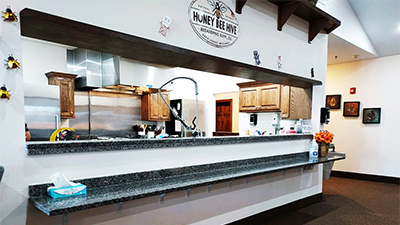
The physical design of a little assisted living home silently presses people towards one another. I keep in mind one four-bedroom residential care home where you could stand in the kitchen and see almost everything: the front door, the open living room, the corridor to the bedrooms, and the yard patio.
The effect on care was obvious. When a resident started to stand from a chair, staff saw instantly. When somebody looked lost, the caregiver slicing vegetables might call out, "Hey there Helen, we remain in here," and Helen would follow the sound of the voice. Locals might wander, however they might not truly disappear.
In larger structures, personnel rely heavily on technology and scheduled rounds to track locals. Call bells, door signals, cameras in corridors. Those tools can be helpful, however they are reactive. Something has to go wrong first.
In a little home, the design itself supports early detection. Caregivers see the subtle indications that generally precede crises: a resident circling the very same doorway numerous times, someone who stops joining the table for coffee, changes in posture or gait. Those small shifts in habits are often the very first flag of an infection, depression, pain, or a brewing fall risk.
There is another piece that hardly ever makes the sales brochure: shared area in a small home typically feels more like a family room and less like a lobby. That matters for connection. Individuals naturally cluster where there is activity, movement, and conversation. If the primary gathering location is the size of a living-room rather of a hotel atrium, residents are much more likely to see each other, notice each other, and in time form the little, common bonds that make life feel worth living.
How small teams construct much deeper relationships
Most households underestimate how much staffing structure influences the psychological tone of dementia care. The task title may be "caregiver" or "resident aide," however in practice these employee are the main relationship in a resident's life, often more present than household or friends.
In big senior care communities, staff scheduling looks like a grid. Citizens are assigned to a hall or a section; staff are assigned by shift and ratio. Turnover is greater. Floaters plug staffing holes. A resident might work with one caregiver for a few weeks, then never see them once again if schedules change.
In a little assisted living home, staffing looks more like a lineup of familiar faces. The same five to 10 people cover most shifts. The owner or manager often deals with website, not in a distant office. If someone calls out, you are more likely to see the supervisor rolling up their sleeves than an unknown firm employee appearing at 10 p.m.
Over time, this consistency enables staff and homeowners to collect mutual history. A caretaker discovers that Mr. Jackson relaxes if you offer him a warm washcloth to hold while you clean his face, or that Mrs. Chen will only accept her nighttime medications after she views the night news. These information might never make it into an official care strategy, however they are the glue that holds daily life together.
For residents with dementia, relationships are not anchored in bio so much as in sensory memory. They may not bear in mind that a caregiver's name is Maria, however they remember "the one who sings while she makes my coffee" or "the man who uses the plaid t-shirts." Small homes make it easier for those sensory signatures to become steady and soothing.
Families feel the difference too. In a big building, it is simple to feel like you are interrupting somebody's workflow whenever you ask questions. In a small home, the group is often pleased, even relieved, to sit at the cooking area table and hear detailed stories about your mother's routines and choices. The more they know, the simpler their work becomes.
Everyday life: small rituals, huge impact
When individuals envision memory care, they frequently think of structured activities: bingo, exercise class, art therapy. These can be beneficial, but in small homes, the strongest connections typically form around normal, repeated tasks.
I have actually viewed a resident with extreme dementia aid fold washcloths every afternoon at a small memory care home. She sat at the table, matching corners with extreme concentration, then stacking the cool squares. Staff might have folded that laundry in five minutes. Rather, they turned it into a daily routine that gave her a sense of purpose and belonging.
In a small setting, there is space for that kind of sluggish, relationship-focused care. The line between "job" and "activity" blurs. Mealtimes stretch out into social time. A caregiver can stand at the stove preparing rushed eggs while talking with three residents seated nearby, inquiring about preferred breakfast foods from their youth. Locals smell the food, hear the clatter of pans, and participate in conversation, even if their words are fragmented.
These micro-rituals serve numerous functions at once:
They anchor the day with predictable rhythms. They provide staff and residents shared recommendation points. They invite homeowners into involvement instead of passive observation. Within that duplicated structure, individual connections strengthen.
In a big building, safety and effectiveness often press versus this kind of flexible, relational technique. When a dining room serves 60 individuals, you can not reasonably let citizens linger near the grill or aid with seasoning. Meals become shifts to carry out, not shared experiences to live through together.
Family participation and the role of respite care
For numerous families, the path into a little assisted living home or memory care home starts with respite care. A spouse or adult kid is tired, however not yet all set to dedicate to a permanent move. They may set up an one or two week stay so they can travel, recuperate from surgery, or merely rest.
Short-term remains in a small home can be a revelation. The person with dementia is not lost in a crowd. Staff frequently have the bandwidth to communicate in information, not just with crisis updates.
I keep in mind an other half who hesitantly placed his wife for a two-week respite in a six-bed residential care home. He arrived each early morning at 9, sat in the typical location, and saw everything. By day three, he was no longer hovering. He was asking the caregivers how they got his partner to accept a shower so calmly. By day seven, he admitted, "She is more relaxed here than she is at home."
The size of the home made his involvement simple. There was always a chair, constantly a caretaker offered to address questions, always a natural entry point for him to sit with his wife without feeling like he was in the way.
Family involvement typically looks different in smaller settings:
You tend to see much shorter, more frequent visits rather than long, tiring marathons. Families are familiar with not just the staff however likewise the other residents, and in some cases their relatives. That cross-connection constructs a sense of neighborhood and shared watchfulness that is tough to reproduce in a big facility where you seldom face the very same individuals at the exact same time.
When a crisis does happen, such as a hospitalization or a significant modification in behavior, those existing relationships make planning easier. You are not speaking with complete strangers about your loved one; you are talking with individuals who have actually peeled oranges for them, chuckled with them throughout music hour, and viewed their nightly habits.
Emotional safety and behavioral symptoms
People often assume that small assisted living homes are best for "easy" citizens which those with more extreme behavioral concerns from dementia need the facilities of a bigger memory care system. The truth is more complicated.
Behavioral expressions like agitation, roaming, shadowing, or calling out often soften in environments where the individual feels seen and safe. Small homes are especially proficient at developing that emotional safety.
Consider roaming. In a big neighborhood, a resident who continuously walks the halls is deemed a fall risk and a guidance difficulty. Staff may try diversion activities, medications, or even secured units. In a little home with enclosed outdoor space, that same walking can be reframed as "Mr. Thompson's everyday route." Staff understand his pattern, stroll with him often, and keep subtle eyes on him when he is in the yard.
When homeowners feel less overwhelmed by noise and crowds, their nervous systems run cooler. That alone can decrease the need for psychotropic medications. It is not a treatment, and little homes definitely have locals with tough behaviors, but the baseline tension is typically lower.
There are trade-offs. Some small homes are not geared up for citizens with serious physical hostility, two-person transfer requirements, or intricate medical devices. Larger communities might have specialized memory care wings with more robust staffing ratios, on-site nurses, and access to treatment services. The key is not to glamorize small homes as magical spaces where dementia becomes easy, but to acknowledge that their really scale modifications how behaviors manifest and how relationships shape the response.

When a bigger neighborhood might be a much better fit
Small does not equivalent much better for every single individual or every family. There are scenarios where a bigger assisted living or dedicated memory care neighborhood can provide advantages.
If your loved one has a really high social drive and is still in earlier-stage dementia, they might take pleasure in the range and bustle of a bigger setting, with more structured activities and more individuals to fulfill. Some large communities use specific programs, on-site physical treatment, checking out professionals, and transport options that little homes can not match.
Families who desire a strong line in between "home" and "care" often feel more comfy with a bigger, more formal environment. In a little residential care home, the intimacy can feel too close for some household characteristics. You might feel obligated to attend occasions or answer more individual questions about household history than you would in a huge structure where anonymity is easier.

Cost can cut in any case. In some markets, little homes are more affordable than large neighborhoods; in others, they are priced as premium memory care. Insurance, veterans' advantages, and Medicaid waivers may apply in a different way depending on state policies and licensure categories.
The most sincere method to think of size is not as an ethical ranking but as a set of trade-offs. If you understand that deep, consistent relationships are important for your loved one, then little homes are worthy of a major look, even if you also tour bigger senior care campuses.
Questions to ask when visiting small assisted living homes
A tour informs you a lot, however only if you know where to look. When you visit a small assisted living or memory care home, a few targeted concerns can expose how well the setting actually supports strong connections in dementia care:
- How numerous residents live here, and what is the normal staff-to-resident ratio on days, nights, and nights?
- How long have most of your caretakers operated in this home, and how do you handle turnover or staffing gaps?
- Can you explain a common day for someone with dementia who lives here, from waking up to bedtime?
- How do you learn more about a brand-new resident's life story, routines, and choices, and how is that information shared amongst staff?
- When a resident is upset or refusing care, what are the very first 3 things your team typically attempts before thinking about medication or outdoors intervention?
Pay attention to how rapidly staff members use locals' names, who they present you to, whether locals make eye contact, and whether anybody appears parked in front of a tv for long stretches. Notice the smells from the kitchen area, the tone of background noise, and how personnel react if a resident interrupts your tour.
The strongest small homes can answer comprehensive concerns without defensiveness, and they will typically volunteer stories that highlight their approach instead of relying just on policy language.
Bringing it back to what matters
Families often concern me asking about amenities, licensing, and care levels, but the concerns that ultimately shape their peace of mind are quieter: Who will observe if my mother appears off? Who will sit with my spouse when he is terrified in the evening and can not remember why? Who will commemorate the small success that just matter if you actually know the person?
Small assisted living homes and residential memory care houses are distinctively placed to respond to those concerns with something more than a pamphlet line. Their scale makes indifference more difficult and connection more likely. Staff and locals do not just share area; they share a life rhythm.
Assisted living, memory care, and respite care are not interchangeable labels. They are various configurations of time, attention, and relationship. When dementia becomes part of the photo, that setup matters more than nearly anything else. A smaller setting does not eliminate the losses that feature cognitive decline, however it does make room for something just as real: the ongoing, daily experience of being known.
BeeHive Homes of Plainview provides assisted living care
BeeHive Homes of Plainview provides memory care services
BeeHive Homes of Plainview provides respite care services
BeeHive Homes of Plainview supports assistance with bathing and grooming
BeeHive Homes of Plainview offers private bedrooms with private bathrooms
BeeHive Homes of Plainview provides medication monitoring and documentation
BeeHive Homes of Plainview serves dietitian-approved meals
BeeHive Homes of Plainview provides housekeeping services
BeeHive Homes of Plainview provides laundry services
BeeHive Homes of Plainview offers community dining and social engagement activities
BeeHive Homes of Plainview features life enrichment activities
BeeHive Homes of Plainview supports personal care assistance during meals and daily routines
BeeHive Homes of Plainview promotes frequent physical and mental exercise opportunities
BeeHive Homes of Plainview provides a home-like residential environment
BeeHive Homes of Plainview creates customized care plans as residents’ needs change
BeeHive Homes of Plainview assesses individual resident care needs
BeeHive Homes of Plainview accepts private pay and long-term care insurance
BeeHive Homes of Plainview assists qualified veterans with Aid and Attendance benefits
BeeHive Homes of Plainview encourages meaningful resident-to-staff relationships
BeeHive Homes of Plainview delivers compassionate, attentive senior care focused on dignity and comfort
BeeHive Homes of Plainview has a phone number of (806) 452-5883
BeeHive Homes of Plainview has an address of 1435 Lometa Dr, Plainview, TX 79072
BeeHive Homes of Plainview has a website https://beehivehomes.com/locations/plainview/
BeeHive Homes of Plainview has Google Maps listing https://maps.app.goo.gl/UibVhBNmSuAjkgst5
BeeHive Homes of Plainview has Facebook page https://www.facebook.com/BeeHivePV
BeeHive Homes of Plainview has an YouTube page https://www.youtube.com/@WelcomeHomeBeeHiveHomes
BeeHive Homes of Plainview won Top Assisted Living Homes 2025
BeeHive Homes of Plainview earned Best Customer Service Award 2024
BeeHive Homes of Plainview placed 1st for Senior Living Communities 2025
People Also Ask about BeeHive Homes of Plainview
What is BeeHive Homes of Plainview Living monthly room rate?
The rate depends on the level of care that is needed. We do an initial evaluation for each potential resident to determine the level of care needed. The monthly rate is based on this evaluation. There are no hidden costs or fees
Can residents stay in BeeHive Homes until the end of their life?
Usually yes. There are exceptions, such as when there are safety issues with the resident, or they need 24 hour skilled nursing services
Do we have a nurse on staff?
No, but each BeeHive Home has a consulting Nurse available 24 – 7. if nursing services are needed, a doctor can order home health to come into the home
What are BeeHive Homes’ visiting hours?
Visiting hours are adjusted to accommodate the families and the resident’s needs… just not too early or too late
Do we have couple’s rooms available?
Yes, each home has rooms designed to accommodate couples. Please ask about the availability of these rooms
Where is BeeHive Homes of Plainview located?
BeeHive Homes of Plainview is conveniently located at 1435 Lometa Dr, Plainview, TX 79072. You can easily find directions on Google Maps or call at (806) 452-5883 Monday through Sunday 9:00am to 5:00pm
How can I contact BeeHive Homes of Plainview?
You can contact BeeHive Homes of Plainview by phone at: (806) 452-5883, visit their website at https://beehivehomes.com/locations/plainview/, or connect on social media via Facebook or YouTube
Running Water Draw Regional Park offers shaded walking paths and open green space where residents in assisted living, memory care, senior care, elderly care, and respite care can enjoy gentle outdoor relaxation.
❧